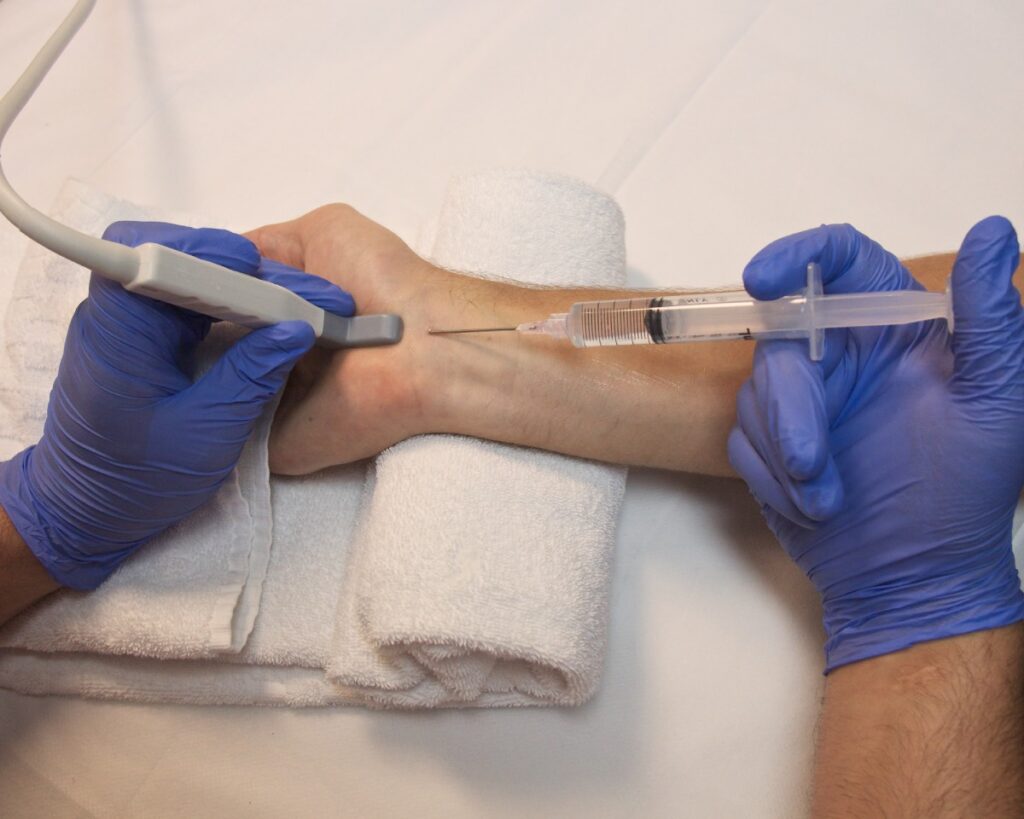
A deep tissue peripheral nerve block is an anesthetic technique used to manage pain by targeting nerves located deeper within the body. Whereas superficial nerve blocks focus on more accessible, surface-level nerves, deep tissue peripheral nerve blocks utilize an injection of local anesthetics around specific nerves or nerve clusters situated deeper within tissues such as muscles, joints, or organs. These deeper structures often require more precise and advanced techniques for a successful block, as they are not as easily reached or visualized as superficial nerves. Deep tissue nerve blocks are particularly beneficial for providing pain relief during or after surgeries or traumatic injuries that affect deeper body structures.
Because it is difficult to accurately locate a target behind multiple layers of tissue, deep tissue blocks are generally performed with imaging guidance, such as ultrasound or fluoroscopy. These imaging methods help clinicians accurately locate nerves and inject anesthetics at the correct depth, ensuring the procedure’s effectiveness while minimizing the risk of injuring surrounding tissues. This level of precision is critical because deeper nerves often supply larger areas of tissue and organs, so successful block can provide extensive pain relief, while errors can cause significant complications or discomfort.
Orthopedic surgeries that involve the muscles, joints, or deep soft tissues of the body often benefit from a deep tissue nerve block for longer lasting and more targeted pain relief than other methods of analgesia. This type of block can be used in procedures like knee or hip replacements, spine surgeries, or in the management of trauma to deeper structures. The precision of nerve blocks allows for better control over pain while reducing the need for high doses of oral or intravenous pain medications.
By directly blocking the pain signals at the source, this method avoids the systemic side effects associated with general anesthesia or opioid medications. The localized nature of deep tissue nerve blocks ensures that the anesthetic effect is confined to the targeted area, reducing the risk of generalized sedation or unwanted side effects that can affect other organs or systems in the body. Ultimately, these blocks allow patients to experience more comfortable recoveries while minimizing the risk of opioid dependency or side effects.
However, deep tissue peripheral nerve blocks present some challenges. One of the main concerns is that the technique is more technically demanding compared to superficial nerve blocks. The deeper nerves are less accessible, and their location can vary depending on the patient’s anatomy, which makes precise injection more difficult. Inadequate needle placement can result in incomplete pain relief or, in some cases, unintentional injury to surrounding structures. Moreover, the requirement for advanced imaging tools such as ultrasound or fluoroscopy adds complexity and may not always be available in all clinical settings, particularly in resource-limited environments.
Despite these challenges, the deep tissue peripheral nerve block remains a vital tool in pain management for surgeries and conditions that affect deep body tissues. When performed correctly, they can provide targeted, long-lasting pain relief, helping patients recover more comfortably while avoiding the risks of systemic anesthesia or opioid use. As with any medical intervention, it is important for healthcare providers to weigh the benefits and risks of this technique in each individual case, taking into consideration the patient’s specific needs, the surgical procedure involved, and the expertise available in the clinical setting.