Disclaimer: This article is intended solely for informational and educational purposes only. It does not constitute medical advice.
Oxygen masks are commonly used in medical settings to provide supplemental oxygen and maintain adequate oxygenation. Sedative and anesthetic medications can reduce respiratory drive, impair upper airway function, and increase the risk of hypoxemia. Modern masks are designed to address these challenges while allowing clinicians to monitor breathing and access the patient’s airway. Patients with an upcoming procedure may have many questions about what to expect—this article will break down the anatomy of the oxygen mask and how it works [1,2].
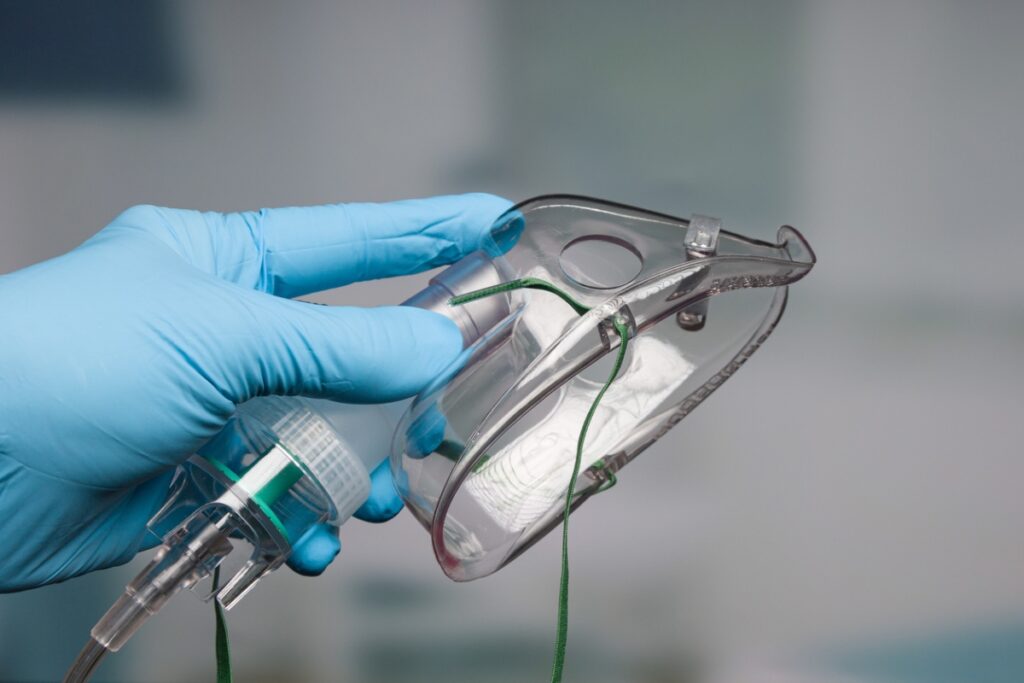
The mask body forms the primary interface between the oxygen delivery system and the patient. Positioned over the nose and mouth, it creates a space through which supplemental oxygen can be inhaled. Unlike tightly sealed ventilation masks, procedural oxygen masks generally permit spontaneous breathing while allowing exhaled gases to escape. Their design accommodates the patient’s facial anatomy while maintaining sufficient oxygen delivery throughout the procedure [1].
Positioning and securing mechanisms help maintain consistent mask placement. Oxygen masks often incorporate a nose clip and an adjustable head strap that secure the mask against the patient’s face. Appropriate positioning reduces unintended displacement and helps maintain oxygen delivery. Oxygen masks are also available in multiple sizes—for example, the Stryker Procedural Oxygen Mask comes in large, medium, and small (pediatric) options [1].
The oxygen adaptor port connects the mask to the oxygen supply. In the Stryker design, this port accommodates medium- or high-concentration oxygen adaptors, allowing clinicians to adjust oxygen delivery according to procedural requirements. The oxygen concentration reaching the patient depends on the device configuration, supplied flow, and breathing pattern. Conventional oxygen masks may allow room air to mix with the supplied oxygen, particularly when inspiratory demand exceeds the delivered gas flow [1,3].
An exhalation valve provides an exit pathway for exhaled gases. One valve design is a one-way flap that opens during exhalation and closes during inspiration to direct exhaled gas away from the mask while helping maintain the intended oxygen delivery pathway. Appropriate exhalation pathways are important for limiting carbon dioxide accumulation within the device [1].
Oral and nasal access ports are a unique feature of procedural oxygen masks. Flexible membrane openings permit instruments such as endoscopes, probes, and tubes to pass through the mask into the mouth or nose. These access points allow clinicians to perform procedures while continuing oxygen supplementation [1].
The end-tidal carbon dioxide (EtCO₂) sampling port supports respiratory monitoring. A dedicated connection allows attachment of a capnography sampling line, which measures carbon dioxide in exhaled gases. This provides information about ventilation and respiratory patterns, complementing pulse oximetry, which measures blood oxygen saturation. Such monitoring is especially relevant during sedation because respiratory depression or airway obstruction may occur despite supplemental oxygen administration [1,2].
Other forms of oxygen delivery, such as a nasal cannula, may be suitable during or after a procedure based on the clinical situation. One study found that high-flow nasal oxygen was associated with less interface discomfort, reduced airway dryness, and fewer episodes of device displacement compared to the Venturi mask. Patient and procedural factors may lead clinicians to use a different form of oxygen delivery [3].
Procedural oxygen masks combine oxygen delivery, respiratory monitoring, and procedural accessibility within a single device. Their structural components work together to support oxygenation, facilitate airway assessment, and accommodate clinical instruments [1,2]. Understanding the anatomy and function of an oxygen mask is a valuable part of patient education, particularly for those who may be nervous or anxious about their procedure.
References
- Stryker. Procedural Oxygen Mask (POM). Stryker Surgical Technologies. Available from: https://www.stryker.com/us/en/surgical-technologies/products/procedural-oxygen-mask.html.
- Al-Husinat L, Jouryyeh B, Rawashdeh A, et al. High-flow oxygen therapy in the perioperative setting and procedural sedation: a review of current evidence. J Clin Med. 2023;12(20):6685. doi:10.3390/jcm12206685.
- Maggiore SM, Idone FA, Vaschetto R, et al. Nasal high-flow versus Venturi mask oxygen therapy after extubation: effects on oxygenation, comfort, and clinical outcome. Am J Respir Crit Care Med. 2014;190(3):282–288. doi:10.1164/rccm.201402-0364OC